
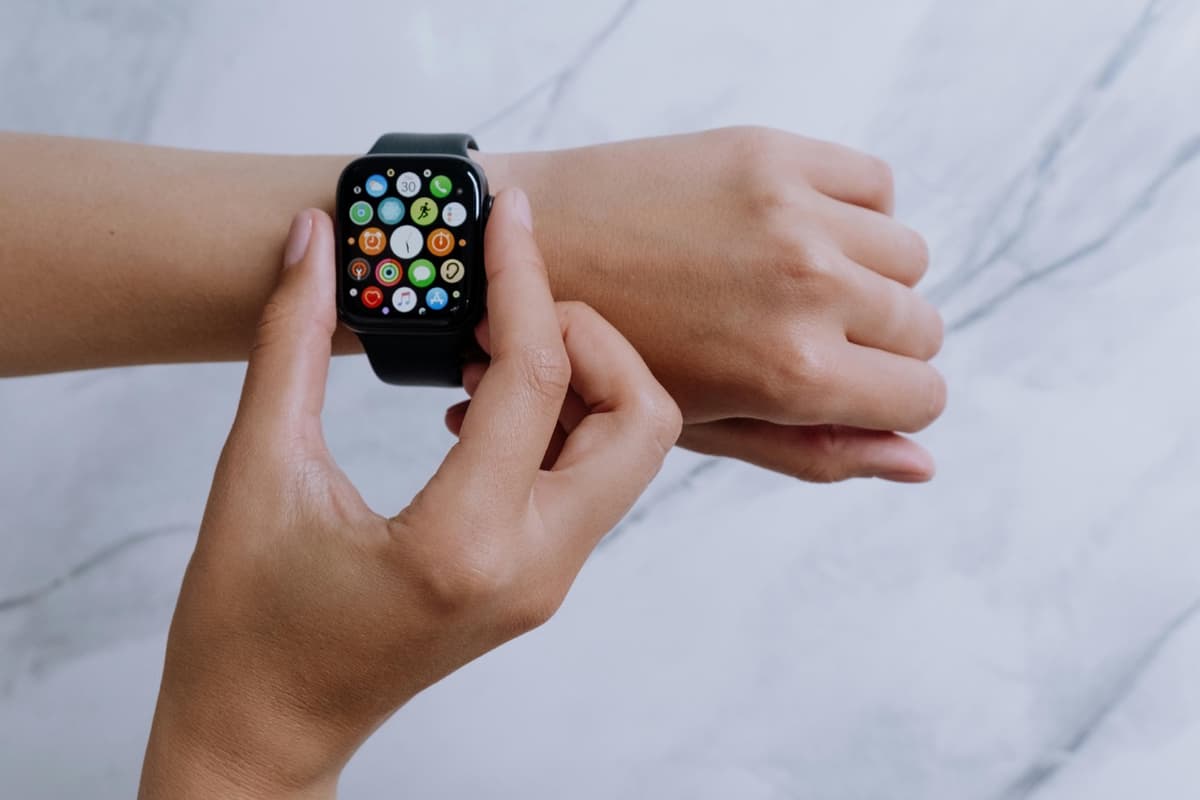
Resting Heart Rate vs. Heart Rate Variability: What Your Apple Watch Tells You
Understanding the key differences between how fast your heart beats and the microsecond variation between beats.
Apple Health tracks multiple cardiovascular indicators on your Apple Watch, but two of the most critical metrics are Resting Heart Rate (RHR) and Heart Rate Variability (HRV). While both originate from the optical PPG sensor on your wrist, they measure fundamentally different physiological dimensions.
1. What is Resting Heart Rate (BPM)?
Resting heart rate measures the average number of heartbeats per minute (BPM) when you are completely at rest. A lower resting heart rate (typically 50–70 BPM for active adults, and 40–50 BPM for endurance athletes) generally indicates strong cardiovascular fitness, higher stroke volume, and cardiac efficiency.
2. What is Heart Rate Variability (HRV / RMSSD)?
While resting heart rate tells you speed, Heart Rate Variability measures the time difference in milliseconds between successive heartbeats.
Contrary to common belief, a healthy heart does not tick metronomically like a clock. Instead, when you are relaxed and recovering, your parasympathetic nervous system introduces constant micro-adjustments between beats (e.g., 850 ms, then 920 ms, then 810 ms). When you are under intense stress, sleep deprived, or overtrained, the sympathetic nervous system dominates and your heartbeat intervals become rigidly identical.
3. Can You Have a Low Heart Rate and High Stress?
Yes! This is one of the most common surprises for Apple Watch users. You might sit on the sofa with a resting heart rate of 62 BPM, but because of impending work deadlines or acute anxiety, your HRV is severely suppressed.
Heart rate alone misses acute autonomic tension. HRV captures the real-time balance between your body’s accelerator and brake pedals.
Summary: How to Use Both Metrics
Think of Resting Heart Rate as your long-term cardiovascular foundation (which improves over months of regular exercise) and Heart Rate Variability as your real-time resilience and recovery gauge (which fluctuates dynamically hour by hour and day by day).
By using Stress Tracker for Apple Watch, you get real-time visibility into your HRV and an overnight recovery score that puts both metrics to work for your well-being.